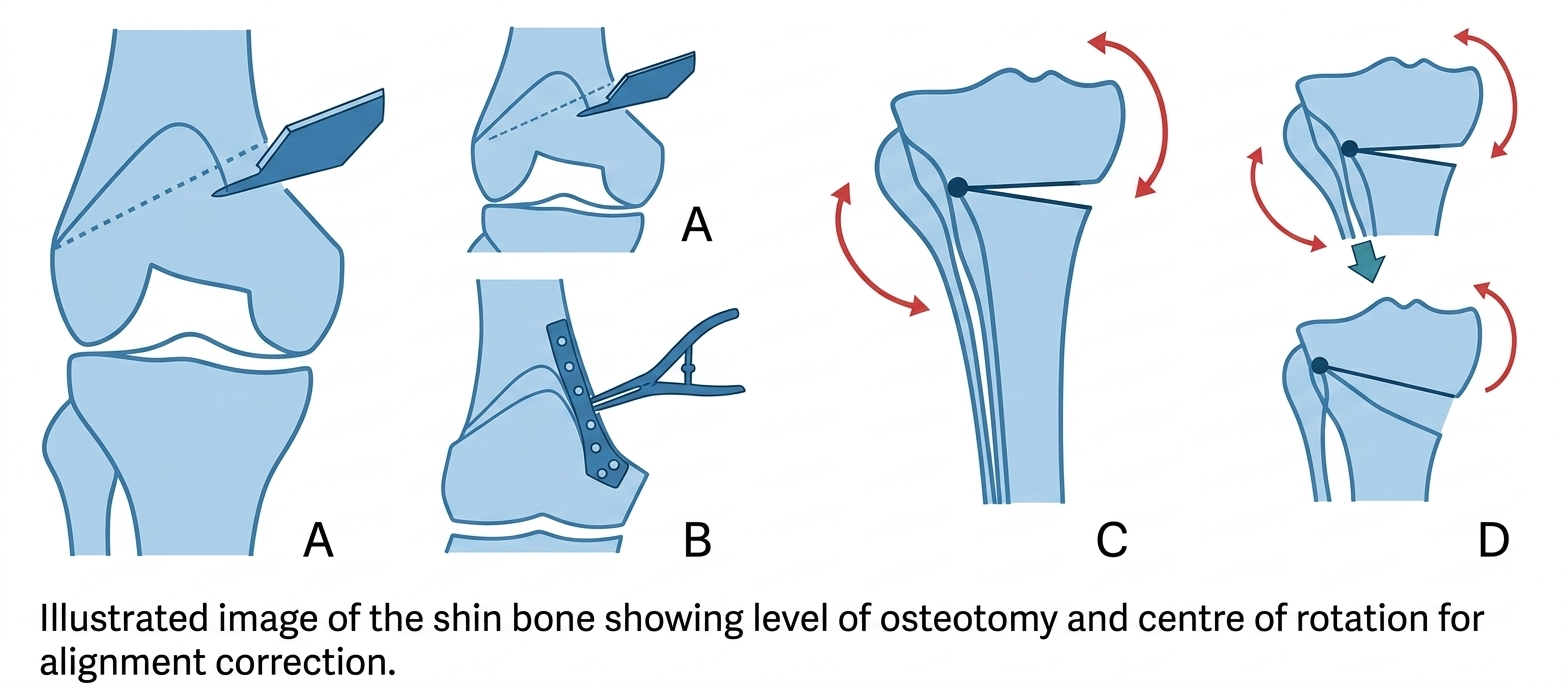
HIGH TIBIAL OSTEOTOMY
What is HTO?
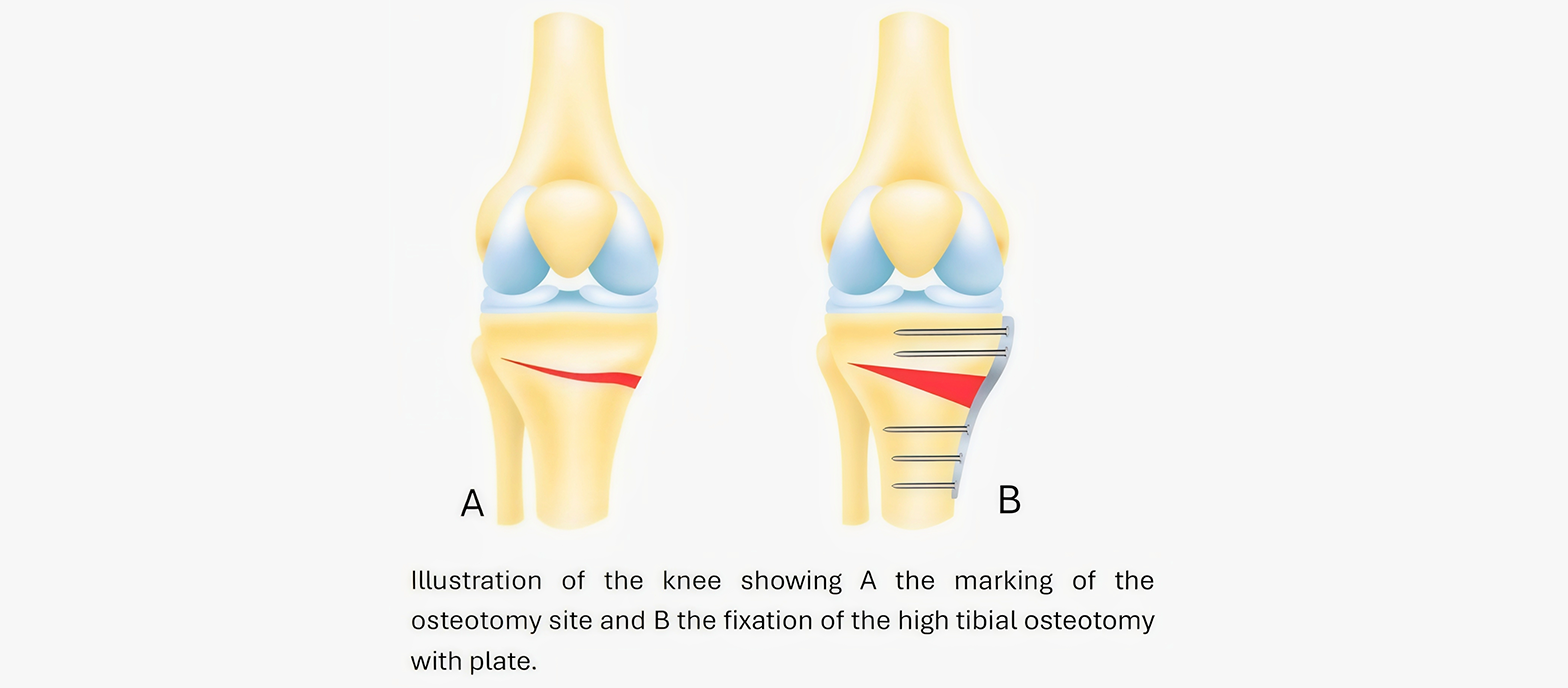
HTO is a surgery that involves reshaping the upper shin bone (tibia) to reduce uneven pressure on the knee joint thereby decreasing the progression of arthritis and also symptoms.
Why is HTO done?
It is done to relieve pain and slow down arthritis in one side of the knee, usually the inner side.
What is the surgical procedure?
The surgeon cuts and realigns the upper part of the shin bone (tibia) to shift your body weight away from the damaged side of the knee.
Are there any risks involved?
There are no specific risks associated, it is generally considered a safe and effective procedure when one compartment (usually inner) alone is involved.
How soon will I recover?
You will be on protected on partial weight bearing for around 6 weeks. As the fracture unites completely you will be able to do all your works normally. Generally it takes 6to 12 weeks.
DISTAL FEMORAL OSTEOTOMY(DFO)
What is a Distal Femoral Osteotomy?
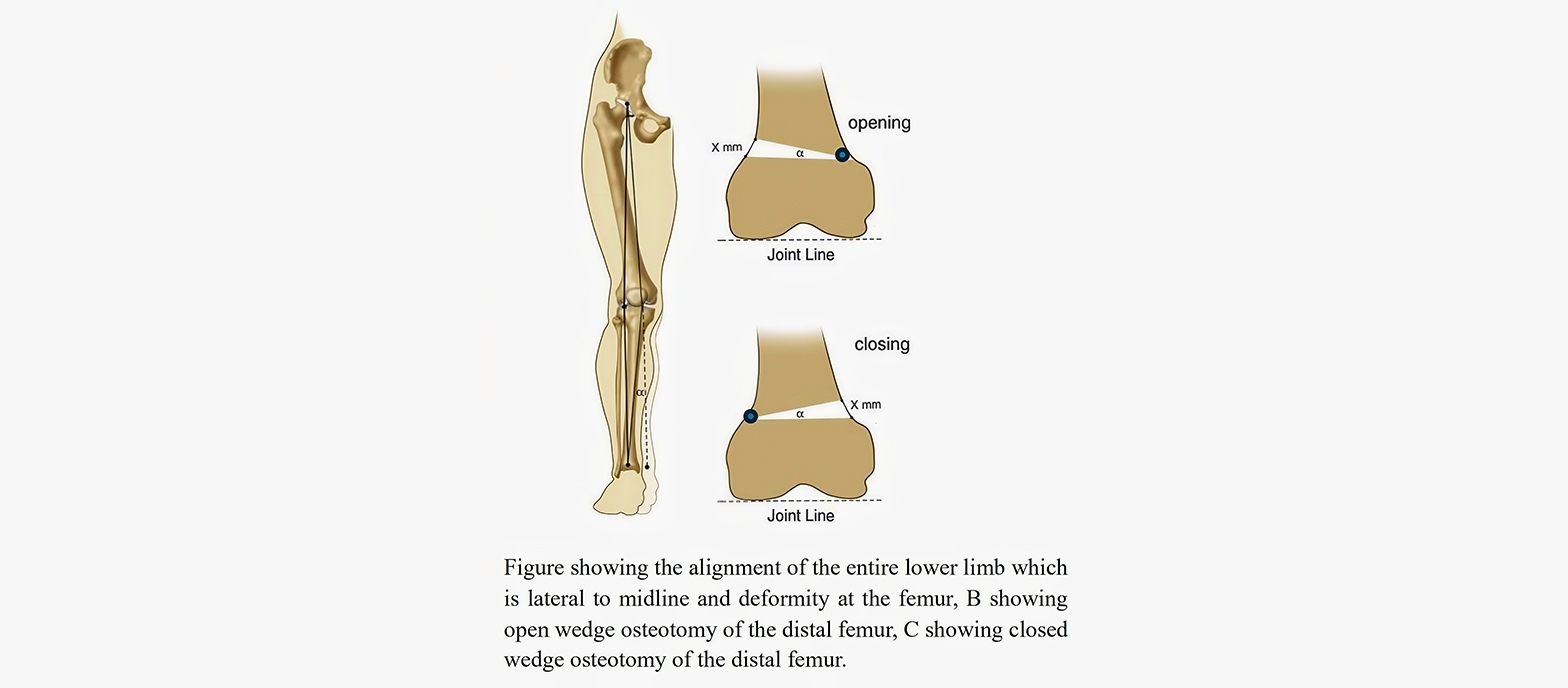
Distal Femoral Osteotomy (DFO) is a surgery where the lower end of the thigh bone (femur) is cut and reshaped to correct the alignment of the leg and reduce pressure on the damaged part of the knee. It is usually done for people who have a knock-knee deformity (valgus) and pain on the outer side of the knee due to arthritis or joint wear.
Why is DFO done?
DFO is done to relieve knee pain, improve joint function, and slow down the progression of arthritis in people who have uneven weight-bearing on their knees because of the alignment issues in thigh bone(femur). By changing the angle of the thigh bone, it shifts the body’s weight to the healthier part of the knee joint, giving the damaged side time to rest and heal.
What is the surgical procedure?
The surgeon makes a cut in the lower part of the femur, near the knee joint. The bone is carefully realigned to a new angle, and the position is fixed using plates and screws. In some cases, a wedge of bone is added or removed to achieve the correction. This helps to redistribute pressure more evenly across the knee.
How soon will I recover?
After surgery, you will need to rest and use crutches for a few weeks. A knee brace may be given for support. You will begin physiotherapy to regain strength and motion. Walking usually starts after a few weeks, and full recovery may take 3 to 6 months, depending on
healing and rehabilitation.
Are there any risks?
Apart from anaesthetic risks, no specific risks are associated with the procedure. This procedure is safe and very effective in relieving the symptoms.
DOUBLE OSTEOTOMY
What is Double Osteotomy?
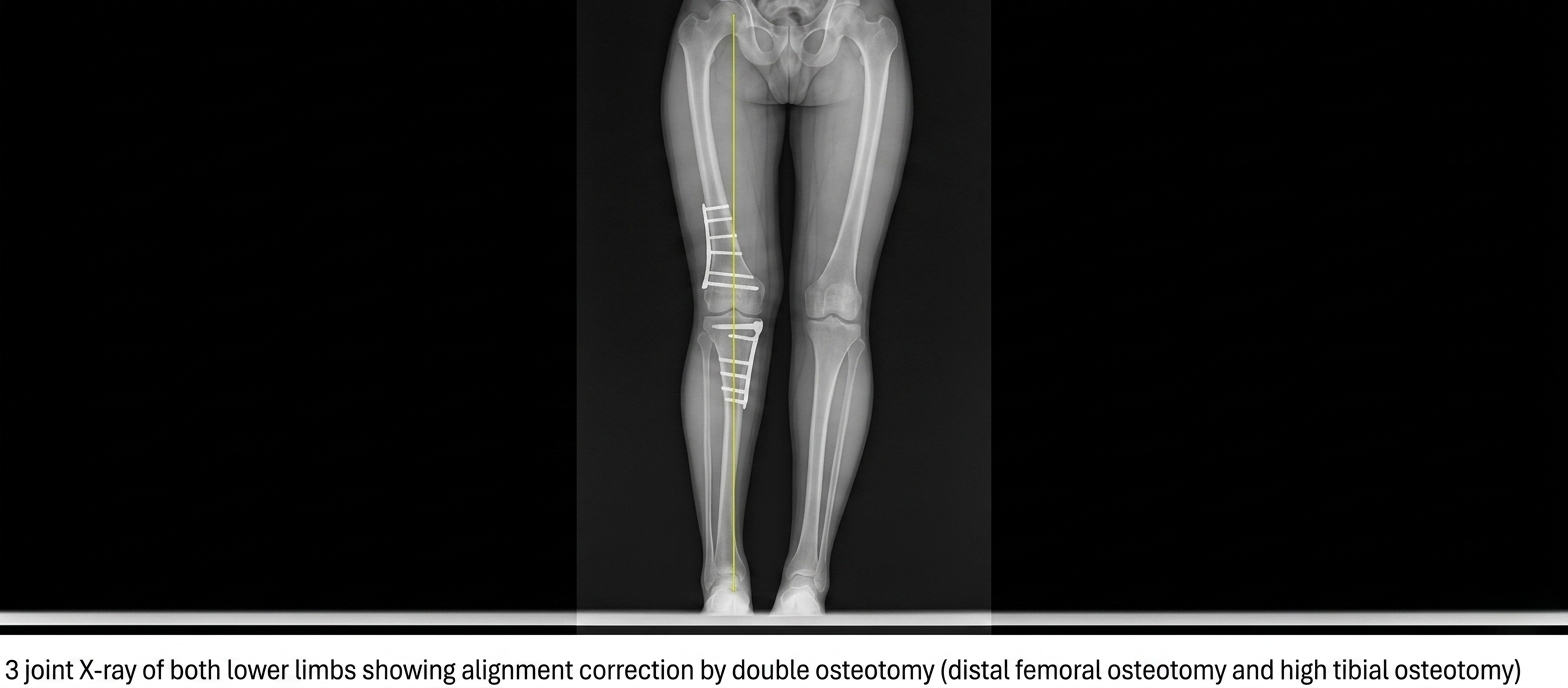
Double osteotomy is a surgery where both the thigh bone (femur) and the shin bone (tibia) are cut and realigned to correct severe knee deformities. It is usually done when there is a combination of bone angulation problems in both the upper and lower parts of the leg, which cause pain, instability, or uneven load on the knee joint.
Why is it done?
This procedure is done to correct complex knee deformities and redistribute body weight evenly across the knee joint. It helps relieve pressure from the wornout part of the knee and shifts it to the healthier part. Double osteotomy helps in reducing pain, improving function, and slowing down arthritis progression in cases where a single bone correction is not enough.
How the surgical procedure is done?
In this procedure, the surgeon makes cuts in both the distal femur and proximal tibia, adjusts the alignment of each bone, and fixes them with plates and screws. Sometimes, a wedge of bone is either added or removed. The corrections are planned carefully based on X-rays or CT scans to ensure the leg is properly realigned.
Are there any risks associated with the procedure?
Apart from anaesthetic risks, no specific risks are associated with the procedure. This procedure is safe and very effective in relieving the symptoms.